Mont-Valérien
An Officer and a SpyMont-Valérien is a fortress on the western edge of Paris that the novel turns into a place of confinement for two opposing figures in the Dreyfus affair: Georges Picquart, punished after challenging the army’s handling of the case, and Henry, arrested after admitting that he authored a document used against Alfred Dreyfus. Its rooms connect the suppression of inquiry to the collapse of the cover-up, while their different occupants give the fortress sharply contrasting meanings.
Setting and Physical Arrangement
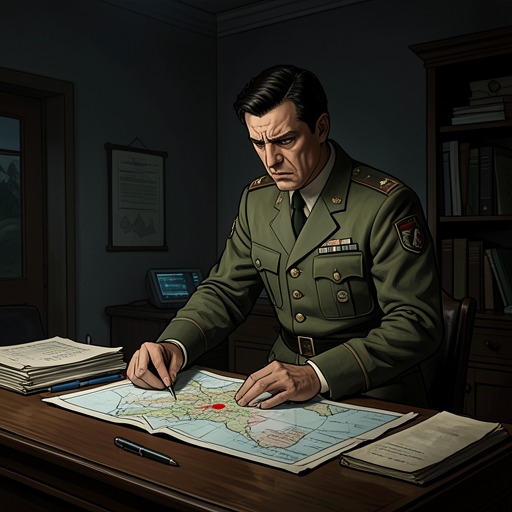
The fortress forms part of the ring of defensive garrisons around Paris. When Picquart is brought there under arrest, he is escorted up a winding staircase to the third floor of a wing reserved for officers. He is the only prisoner. His door remains locked, and a sentry stands at the foot of the stairs, making custody a visible, controlled arrangement rather than an open-ended encounter with other inmates.
The room provided to Picquart consists of a small sitting room, a bedroom, and a lavatory. Its barred windows look across the Seine and the Bois de Boulogne toward the Eiffel Tower, eight kilometres to the east. The view establishes the fortress’s proximity to the capital while marking the barrier between the detained officer and ordinary life beyond it. In winter, the wind around the battlements is almost the only sound he hears. The rooms are austere in their security, but the narrative does not present them as physically privative: Picquart has a bed, a chair, writing materials, and books.
Picquart’s Imprisonment
Picquart’s confinement follows the verdict against Émile Zola. While Picquart is attending the funeral of Louis Leblois’s father, General Billot signs the warrant for his arrest. The order accuses him of serious breaches of professional duty and errors contrary to army discipline, and directs that he be held at Mont-Valérien until further orders. The stated charge makes his imprisonment part of the military response to his conduct; the chronology places it immediately after a public trial that has intensified scrutiny of the affair.
The arrest is arranged to avoid newspaper attention. An elderly colonel arrives shortly before dawn with a private soldier, presents the warrant, and asks for Picquart’s service revolver. Picquart is already dressed in civilian clothes and has packed a suitcase. As he leaves, he asks his building manager to continue believing that he is an honest man, despite what the newspapers say about him. Mont-Valérien thus marks a change in his public and institutional position: a serving colonel who had investigated a suspected espionage case becomes a prisoner accused of misconduct.
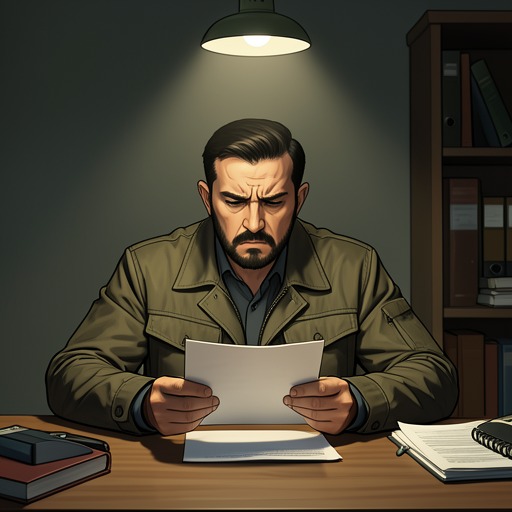
Picquart’s own account complicates the expected meaning of imprisonment. He has books, paper, and time to read, including writings by Goethe, Heine, and Ibsen; Proust sends him Les Plaisirs et les Jours, and his sister supplies a French-Russian dictionary. He regards the lifting of the secrecy he had carried as a form of release even while the fortress keeps him physically confined. That reversal gives the rooms a double function: they restrict his movement, yet relieve him of the solitary burden of withholding what he knows.
The fortress does not sever Picquart from the legal proceedings outside it. Its commander refuses visits from anyone who is not a serving officer, but cannot prevent Picquart from meeting his lawyer. The lawyer brings a subpoena requiring him to testify at Zola’s public trial. The scene makes the limits of military control concrete: Picquart remains locked up, yet the public case against Zola draws his evidence back into the legal contest that his arrest has not resolved.
Henry and the Reuse of the Rooms
Later, Mont-Valérien becomes the destination for Henry after he admits authorship of a document that named Dreyfus. A government statement reports that the Minister of War ordered Henry’s arrest immediately after the admission and that he was taken to the fortress. For Picquart, receiving this news in his cell changes the place from the site of his own detention into a setting where the army’s concealed evidence has begun to turn against one of its defenders.
Picquart imagines Henry being locked in the same rooms he occupied during the winter. The recurrence is significant because the two arrests arise from opposite positions in the affair. Picquart has been confined after exposing grounds to doubt Dreyfus’s conviction; Henry is confined after acknowledging his connection to incriminating evidence. The fortress therefore holds, in sequence, the investigator whom the institution sought to silence and the officer whose admission makes the institution’s treatment of evidence harder to defend.
The narrative also distinguishes what is reported from what remains unknown. Picquart receives confirmation of Henry’s arrest and later imagines the interval before Henry’s death, but he cannot know what happened during those hours. The fortress is firmly identified as the place of Henry’s detention, and as the rooms Picquart had occupied; the narrator’s uncertainty concerns events within that confinement, not the location itself. This separation matters in a novel that uses Picquart’s retrospective account while acknowledging that the account is fictional: the scene presents a dramatic link between the prisoners without claiming that every narrated detail constitutes documentary testimony.
Narrative Significance
Mont-Valérien’s role is built through repetition and contrast rather than through a change in its physical description. It is first the endpoint of a warrant that frames Picquart’s investigation as a breach of duty; it then becomes the setting from which he can still be called to testify publicly. Later, Henry’s arrest brings the consequences of the forged document into the same rooms. The fortress’s secure doors and guarded stairs represent military authority, but they do not settle the truth of the case or prevent evidence from reaching a public hearing.
The novel’s author’s note cautions that the story uses the techniques of fiction to recount real events and that Picquart never wrote the secret account presented by the book. Mont-Valérien should consequently be understood as a location within that shaped narrative, not as proof that the fictional frame is a historical document. Within the story, however, the fortress is a precise hinge in the sequence of confinement: Picquart’s detention does not end his participation in the affair, and Henry’s later detention brings the same space into the account of the evidence that helped sustain Dreyfus’s conviction.